

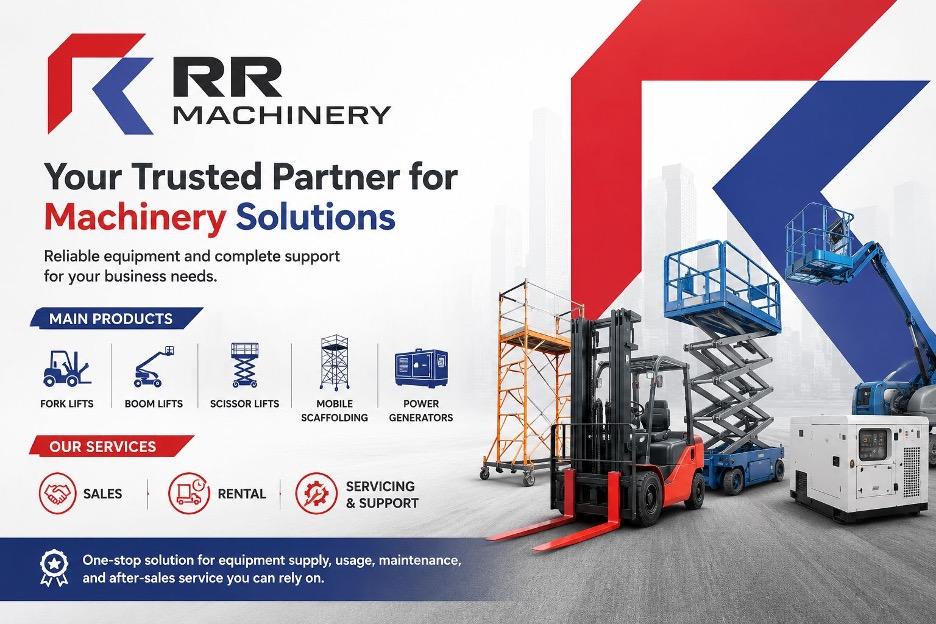
Facility maintenance often involves working at height, whether it is replacing warehouse lighting, servicing HVAC systems, repainting exterior walls, or inspecting building structures. Choosing the right access equipment plays an important role in completing these tasks safely, efficiently, and within budget.
One of the most common questions facility managers ask is whether a scissor lift or a boom lift is the better option. While both are designed to provide safe elevated access, each machine is built for different working conditions and project requirements.
Understanding the differences between these two types of lifts can help maintenance teams avoid unnecessary rental costs, improve productivity, and reduce workplace risks.
Understanding the Difference Between Scissor Lifts and Boom Lifts
Both scissor lifts and boom lifts belong to the category of Mobile Elevating Work Platforms (MEWPs). However, their movement capabilities are very different.
A scissor lift moves only in a vertical direction. The platform rises directly above the base, making it ideal for jobs where workers need straight upward access. Because of its stable design and spacious platform, it is commonly used inside warehouses, shopping malls, factories, and other buildings with flat floors.
A boom lift provides much greater flexibility. Its telescopic or articulating arm allows the platform to extend upward as well as outward. This makes it possible to reach over machinery, around obstacles, or into difficult locations that cannot be accessed with a scissor lift.
For maintenance work involving complex building layouts or outdoor structures, a boom lift is often the more practical solution.
Choosing Between Vertical Access and Extended Reach
The type of access required is usually the biggest factor when selecting equipment. If maintenance work is located directly overhead, such as replacing ceiling lights, repairing sprinkler systems, or servicing overhead conveyor belts, a scissor lift is usually the most efficient choice. It provides a stable working platform with enough room for technicians and their equipment.
If workers need to reach areas that are positioned behind obstacles or above equipment, a boom lift offers the flexibility needed to complete the task without constantly repositioning the machine. Simply put, scissor lifts are designed for vertical access, while boom lifts excel when horizontal reach is equally important.
Selecting Equipment Based on the Working Environment
The work environment often determines which type of lift is more suitable before the working height is even considered.
Indoor Maintenance Projects
Indoor facilities such as warehouses, manufacturing plants, distribution centers, and commercial buildings generally have smooth and level flooring. These conditions make scissor lifts an excellent choice because they provide excellent stability and a larger platform for workers and tools.
Their wider platforms also make them suitable for maintenance jobs involving multiple technicians.
Outdoor Maintenance Projects
Exterior maintenance often involves uneven surfaces, gravel, slopes, or construction areas. In these situations, rough terrain boom lifts provide better mobility and stability. They are commonly used for building inspections, gutter maintenance, facade repairs, signage installation, and outdoor lighting maintenance.
Their ability to operate safely on challenging ground conditions makes them a preferred option for outdoor facility management.
Areas with Limited Access
Some facilities contain fixed obstacles such as storage racks, large machinery, piping systems, or ventilation ducts. Boom lifts can maneuver around these obstacles thanks to their articulated arms, allowing operators to access difficult locations without moving the base unit multiple times. This capability can significantly improve efficiency during complex maintenance projects.
Platform Capacity and Workspace Requirements
Height is not the only factor that matters when selecting aerial access equipment. Maintenance teams should also consider how much weight the platform needs to support.
Scissor lifts generally offer larger platforms and higher load capacities. This allows technicians to bring additional tools, replacement parts, lighting fixtures, or HVAC components while still providing enough space for multiple workers.
Boom lifts usually have smaller platforms designed for one or two operators carrying lighter equipment. Although they provide exceptional reach, their platform capacity is often more limited. Planning platform requirements in advance helps reduce unnecessary trips and improves overall productivity.
Safety and Operator Training
Both scissor lifts and boom lifts should only be operated by trained personnel who understand the equipment’s controls, operating procedures, and safety requirements. Boom lifts require additional operator awareness because extending the arm changes the machine’s center of gravity. Operators must understand load positioning, swing radius, and safe working limits before operating the equipment.
Scissor lifts are generally more stable, but operators should still follow proper safety procedures, including respecting load limits, using guardrails correctly, and ensuring the ground surface is suitable for operation.
Facility managers should also verify that any rented equipment includes inspection records, maintenance documentation, and operating guidance. Working with an experienced supplier such as RR Machinery can help ensure that equipment is properly maintained and ready for safe operation.
Why Renting Can Be a Better Option
Purchasing aerial access equipment may not always be the most cost effective decision, especially for facilities that only perform maintenance at height occasionally.
Renting provides greater flexibility by allowing businesses to choose the most suitable machine for each project without worrying about storage, servicing, repairs, or equipment depreciation.
For indoor maintenance projects requiring reliable vertical access and larger platforms, exploring Scissor Lifts Rental Singapore allows facility managers to compare available models based on working height, platform capacity, and project requirements.
Rental solutions also make it easier to scale equipment needs throughout the year as maintenance schedules change.
Frequently Asked Questions
Can a scissor lift be used outdoors?
Yes. Some scissor lift models are designed for outdoor use on firm and level surfaces. However, they are generally not suitable for rough terrain or steep slopes where boom lifts perform much better.
Which lift is better for working around obstacles?
Boom lifts are the better choice when maintenance work requires reaching over equipment, around structures, or into confined spaces. Their articulating arms provide much greater flexibility than scissor lifts.
Do operators need special training?
Yes. Both scissor lifts and boom lifts should only be operated by trained personnel who understand the equipment’s safety procedures, operating limits, and workplace regulations.
Is renting better than buying?
For facilities that only require aerial access equipment occasionally, renting is often the more economical solution. It eliminates ownership costs such as maintenance, storage, repairs, and depreciation while providing access to the most appropriate equipment for each project.
How do I choose the right platform size?
Consider the number of workers, the weight of tools and materials, and whether equipment needs to be transported on the platform during the maintenance task. Selecting the right platform capacity helps improve efficiency and minimizes unnecessary trips.